
Should Your Website Come First, or Substack?
Why I moved to Substack three years ago, why I stopped using my website, and why that was only half a mistake

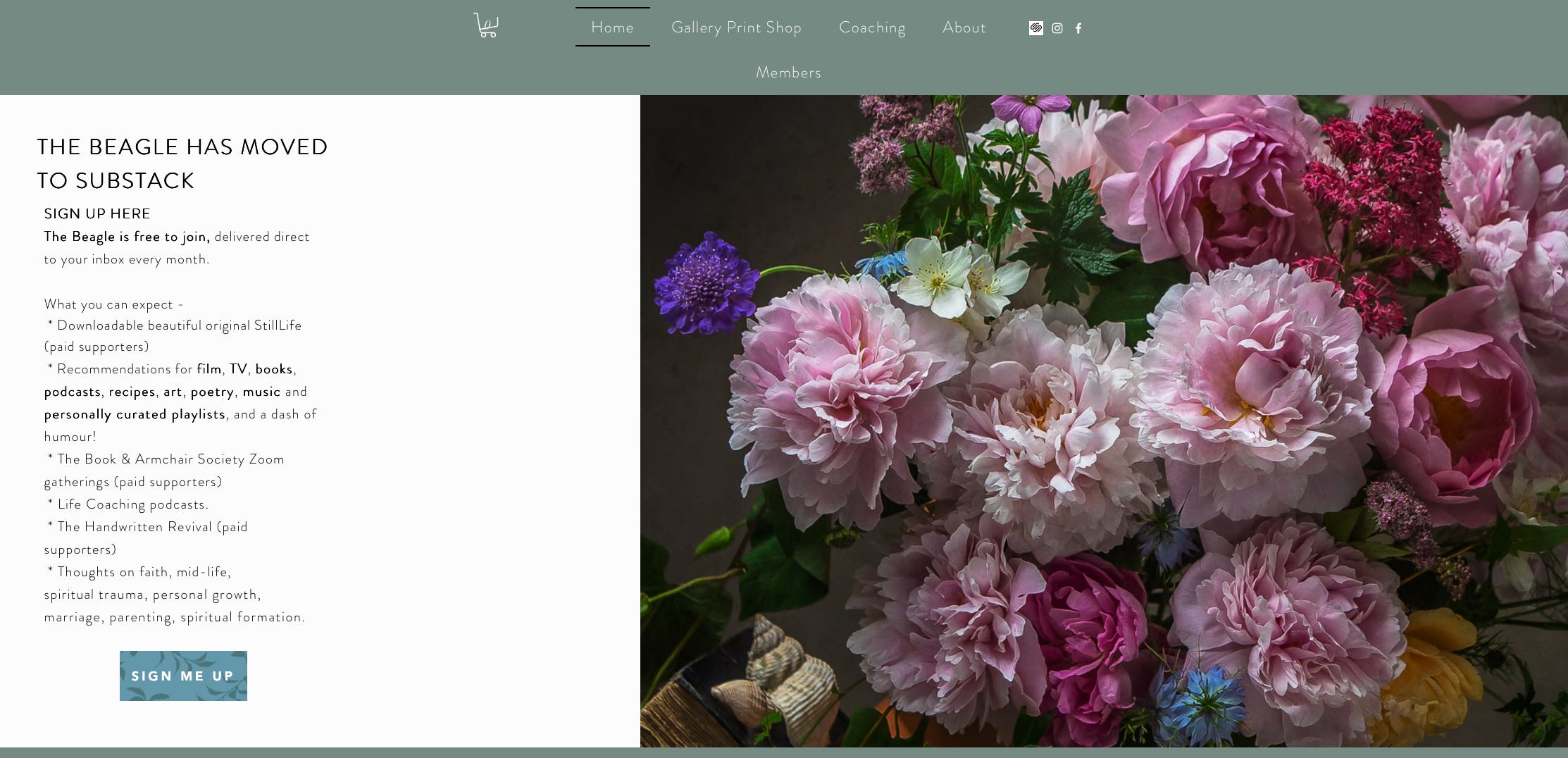
When I moved to Substack three years ago, I essentially abandoned my website. I didn’t delete it, it’s still there, but I stopped posting to it, stopped thinking about it, and quietly let it sit while I built everything here. The newsletter, the paid tier, the community, the content. All of it moved to Substack, and I haven’t looked back.
I’ve recently learned that was only half a mistake. The half that wasn’t a mistake is why I’m still here. The half that was is what I want to talk through today, because I suspect some of you are in the same position, and a few of you are about to make one version of the same error.
Why I came to Substack in the first place, and why it was the right call
My website could do most of what Substack does, technically. It had a blog. It had an email signup. I could have set up a paywall with the right plugin.
But Substack made it cleaner, easier, and more sustainable. When I write a post here, it goes to everyone’s inbox automatically. On a website, that doesn’t happen unless you’ve set up a separate email system and connected everything correctly, which is fiddly and prone to breaking. Substack also put me in a community of other writers, people can find me through recommendations, through the platform itself, through other publications that share my work. That discoverability within Substack doesn’t exist on a standalone website.
And the paywall. For anyone charging for their content or their community, Substack handles it in a way that a website simply doesn’t, unless you’re willing to spend time and money on the infrastructure. I wasn’t. Substack is genuinely the better home for what The Beagle for Beauty is trying to do, and I don’t regret moving here.
So what was the mistake?
Google can’t find me.
Or rather, it couldn’t until yesterday, when I sorted it out (you can read exactly how I did that in the post before this one). But for three years I’ve been writing here with no thought for whether any of it was searchable, which means anyone who didn’t already know I existed had almost no way of discovering me through a search engine. All my growth has come from within Substack or from people sharing my work directly. This created a ceiling I wasn’t aware of. I won’t repeat myself here, but I encourage you to go read the tagged post.
The advice I was given and where I think it sits
The advice I received was to keep my main content on my website and use Substack more conversationally, directing readers from Substack to the website for the full piece. The reasoning is sound: Google indexes websites more reliably than Substack, so your long-form content lives where Google can find it, and Substack becomes the community and conversation hub.
I thought about this for a while, and I think it’s right advice for some people and wrong advice for others.
It’s right if your website is genuinely your primary home, if that’s where your archive lives, where people go to understand who you are, where you’ve built something independent of any platform. In that case, Substack as a community and conversation layer alongside it makes a lot of sense.
It’s wrong, or at least incomplete, if, like me, everything you’ve built is on Substack. My paid community is here. My live gatherings will be here. The book club is here. Asking my readers to click away from their inbox to a website, then potentially click again to get back to the paid features, creates friction at every step. And paid subscribers especially aren’t going to love being redirected away from the platform where they pay me.
What I’m actually doing
Substack stays as my readers’ home. Their emails, their community, their paid access, none of that moves.
What I’m doing is treating my website as a Google-facing window. A few days after a Substack post goes out, I’ll republish a version there, either the full piece or a long excerpt, with a note that it was originally published here, and a link back. This creates content Google can index without sending anyone a second email, because the website post doesn’t go to an inbox. Over time, Google finds the website. Readers find Substack.
There’s a third reason to keep the website active that has nothing to do with SEO: my Gallery Print Shop and Life Coaching practice both live there. Substack has no e-commerce functionality; you cannot sell physical products or services through it, so for anyone selling prints, offering coaching, running courses on an external platform, or anything with a booking or checkout system, the website remains the only place that can happen. I have a print store and a coaching practice I’m honestly guilty of not linking to often enough, and Substack is actually the perfect place to remedy that: a newsletter that regularly points readers toward something they can buy or book is a much better shop window than a website that sits quietly waiting to be found.
And I’m making sure my website has a clear, prominent subscribe link pointing back here.
Two homes, but one email list. Substack as the centre, website as the window in — and the shop.

The one thing I’d say to anyone starting out
If you’re just beginning and deciding where to build: the question isn’t website versus Substack. It’s what do you want your readers’ experience to be, and where do your most important features live?
If you’re charging for content, running a community, or wanting your writing to go directly to people’s inboxes with minimal friction, Substack is probably your centre. Build the website too, but as an SEO layer and a home for people who find you through Google, not as the primary experience.
If you’re building a business where the website is the destination — a shop, a portfolio, a coaching practice with a booking system, then the website comes first and Substack is the community layer on top.
The mistake isn’t choosing one. The mistake is abandoning the other entirely, which is what I did, and which I’m now quietly fixing.
If any of this is useful, or if you’ve landed somewhere different, I’d love to know. Drop it in the comments.
Hi Jacqueline, thank you for this, I’ve struggled with the same questions. One thing though, it’s important not to duplicate articles in different places. Google will downgrade you if you do. Also, if like me you have set your settings in Substack to not allow AI to steal your content, Google will be slower to index your articles. This is a pain in the neck! However, I want to retain y IP. But it’s a trade-off that I’ve made. Hope this is useful. Every blessing for your beautiful work.
This makes so much sense!